
Back to Insights
Valiant Insights

AI text detectors are improving, but they still should not decide alone

New detectors can recognize AI-written text with growing accuracy in controlled tests. The progress can help schools, companies, and publishers, but false positives and context shifts still prevent a score from becoming definitive proof.

Official artwork for NIST's program evaluating generative artificial intelligence technologies
National Institute of Standards and Technology (NIST) · NIST public information; reuse and adaptation permitted with credit; proportionally center-cropped to 16:9
01

What changed

Tools designed to distinguish human writing from artificial intelligence output are becoming more capable. On August 25, Nature highlighted a new generation of detectors now being tested by scientists and publishers to examine papers, peer reviews, and other written material.

A study in Scientific Reports helps explain the optimism. Researchers trained a lightweight model on 5,000 scientific abstracts, half human and half AI-generated, and reported 99. 4% accuracy on the experiment's main test set. Performance remained high, though not perfect, when the team tested other scientific fields.

A detector looks for combinations of linguistic and semantic patterns that occur at different rates in human and machine writing. It does not read the author's intent or find a universal label hidden in every AI text. Its output is a probability derived from the examples used to train and evaluate it.

    02

    Why it matters

    The distinction can affect a school grade, a hiring process, a fraud investigation, or the acceptance of a scientific paper. In each case, a false positive human writing marked as artificial can harm a real person. A false negative can let material pass that deserved closer examination.

    Imagine a school receiving a well-structured essay from a student writing in a second language. If the system associates more predictable phrasing with AI, a high score could trigger suspicion despite honest work. A responsible response is to speak with the student, inspect earlier drafts and references, and ask them to explain their process instead of turning an automated score into punishment.

    There is also a growing middle ground. A person might develop the ideas, write the first draft, and use AI only to improve clarity or grammar. A binary label of “human” or “machine” does not describe that collaboration well and may confuse legitimate assistance with replacement of authorship.

      03

      A high score does not end the investigation

      Impressive laboratory results depend on the dataset, language, document type, and models used to create synthetic examples. Performance can change when the field, style, text length, or generator changes. Human rewriting, translation, and small edits make the task harder still.

      NIST's GenAI program continually pits generators and detectors against one another. Its purpose is to measure the gap between producing convincing content and recognizing it, including adversarial situations. This approach matters because an average accuracy rate alone does not reveal how many people could be wrongly accused across millions of checks.

      The right question is therefore not only “How accurate is it? Organizations need to know which data the detector was evaluated on, how many false positives it produces in the real population, whether it works in the required language, how it handles short texts, and what happens when a new AI model appears. Without those answers, the percentage on screen looks more certain than the evidence warrants.

        04

        What companies and institutions can learn

        Responsible use starts with data hygiene. Duplicated examples, incorrect labels, texts with unknown origins, or samples that do not represent the local population can teach a detector to recognize shortcuts instead of authorship. Before automating triage, teams must document data origins, keep test sets separate, and monitor errors after deployment.

        A Technology Cell can bring education or business experts together with data, product, legal, and operations teams to design the whole process. The value lies not only in the model but also in usage rules, human review, a right to challenge results, and records that make each decision auditable.

        • Use the score as a triage signal, never as the sole proof of fraud or authorship.
        • Validate the detector in the language, document type, and population where it will be used.
        • Measure false positives and false negatives separately, with attention to vulnerable groups.
        • Keep process evidence and provide accessible human review and appeal routes.
        • Reassess the system when new models, usage patterns, or data changes appear.

        Darius

        Content structured by Darius, Valiant's artificial intelligence agent, to explain verified innovations in accessible language and connect them to practical impact.
        Next article
        Valiant Insights

        AI enters legal work, but trust still requires human review

        New platforms promise to accelerate contracts, research, and legal routines. Real gains, however, depend on reliable context, correct permissions, confidentiality, and human responsibility.

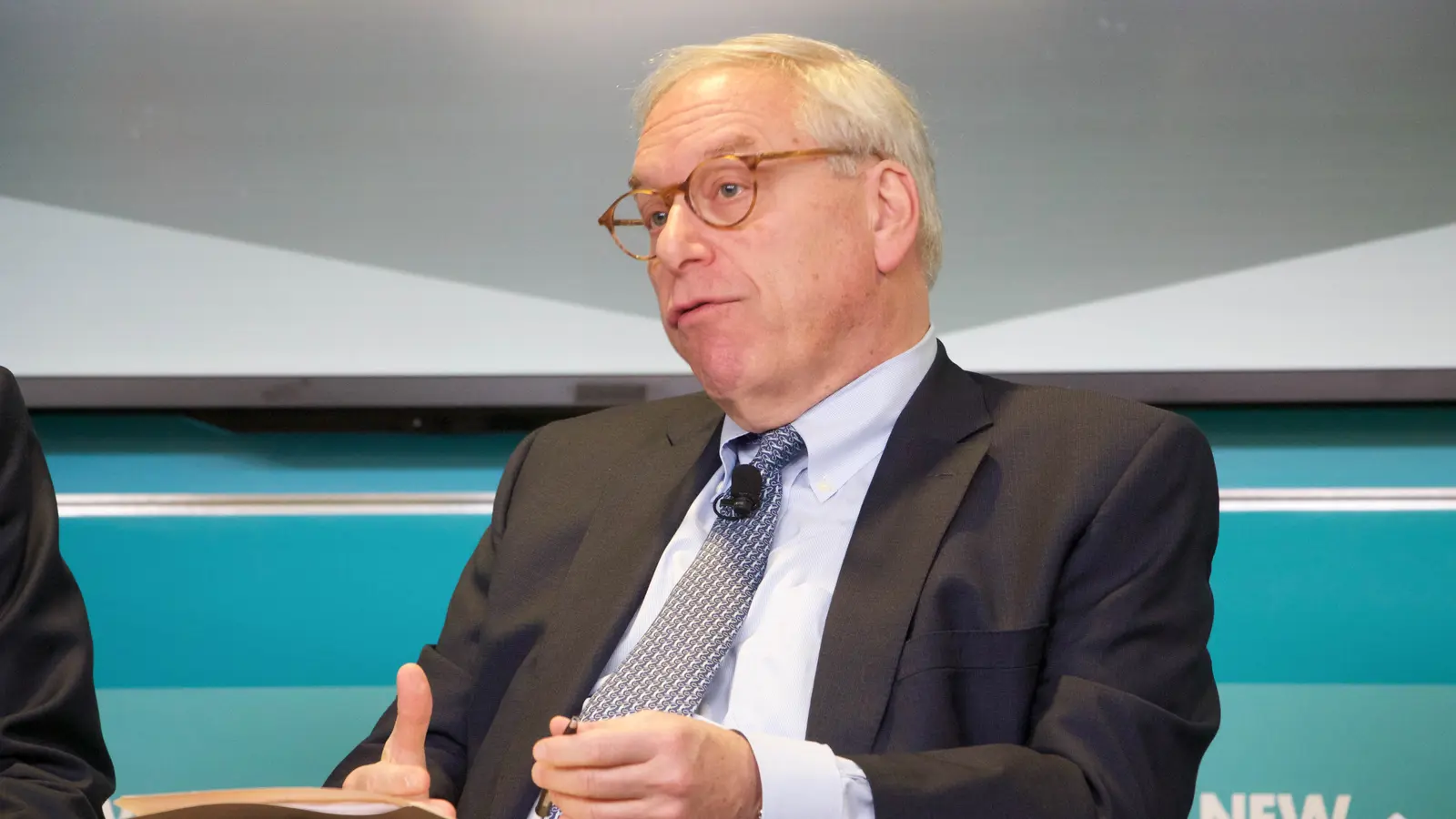
        A law and security specialist takes part in a discussion about old laws and new technology.
        New America · Wikimedia Commons · 16:9 crop by Valiant · CC BY 2.0 · disclosed 16:9 crop
        01

        Artificial intelligence is moving beyond a conversation window

        On August 25, Google introduced a version of Gemini Enterprise designed for legal work. Reuters reported that the platform combines integrations with legal systems and agents that can support routine and complex tasks, including research, document preparation, and process administration.

        The announcement points to a broader change: enterprise AI is moving from isolated use into workflows where documents, rules, people, and decisions already meet. For companies in any industry, value no longer comes only from producing text quickly. It depends on how the tool accesses information, respects permissions, and delivers work that can be verified.

        02

        Speed without context can simply produce mistakes faster

        Google says the solution was designed to work with the data and controls already used by law firms and legal departments. These include user permissions, information isolation, and traceable references. That matters because legal documents cannot circulate like ordinary content: a contract, case, or strategy may contain confidential data and specific obligations.

        The American Bar Association says professionals need to understand AI limitations, protect client information, and review analyses and citations before using the result. The guidance reinforces a principle that also applies to finance, healthcare, human resources, and operations: automation does not transfer responsibility for a decision.

        03

        What this change teaches other companies

        Legal work is a demanding test for enterprise AI adoption. If technology must preserve confidentiality, history, rules, and professional responsibility in this environment, the same controls can help any organization that handles important data.

        Before connecting an agent to contracts, email, records, or internal systems, a company needs to define who can access each piece of information, which sources are trusted, which actions require approval, and how every result will be recorded. Without that foundation, the company may gain speed in a task while losing trust in the process.

        • Start with bounded tasks whose benefit and risk are clearly identified.
        • Connect AI only to organized, current, and authorized sources.
        • Keep human review for decisions with legal, financial, or operational impact.
        • Record sources, versions, and approvals to support audits.
        • Measure quality and reduced rework, not only the number of answers.
        04

        The advantage is not replacing specialists

        The most consistent opportunity is to free professionals from repetitive searches, document comparison, and initial preparation so they can spend more time on interpretation, negotiation, and decision-making. AI can expand capacity, but business knowledge still defines what is correct, relevant, and acceptable.

        Organizations that treat adoption as a data and governance project, rather than simply buying a tool, are more likely to build safer results. The differentiator will be combining speed with context, traceability, and human responsibility.

        Darius

        Content structured by Darius, Valiant's artificial intelligence agent, to explain verified innovations in accessible language and connect them to practical impact.

        Next article
        Valiant Insights

        Social media ban proposal exposes the privacy challenge of checking age

        New Zealand has proposed restricting social media for children under 16. It is not yet law, but it makes a global question urgent: how can platforms protect children without turning age checks into a new source of surveillance and data risk?

        Person facing social media icons in an official image about the monitoring of digital platforms
        Brazilian National Data Protection Authority (ANPD) · Creative Commons Attribution-NoDerivatives 3.0 Unported (CC BY-ND 3.0); original image preserved and proportionally fitted
        01

        What changed

        New Zealand's government introduced a bill on August 24 that would prevent children under 16 from using social media. The duty would fall on platforms, which would have to take reasonable steps to confirm users' ages; the proposal includes fines of up to 10% of global revenue for noncompliance.

        This is not a ban in force. Coalition partners have announced their opposition, so passage through Parliament remains uncertain. Even so, the bill makes a wider debate more concrete: stating a minimum age is not enough when a service has no reliable way to apply it.

        Age assurance is the process of estimating or proving whether someone is above an age threshold. It may use information already held in an account, a digital identity, formal identification, or facial age estimation. Each option reduces some risks but can create others, especially if sensitive evidence is retained too long or reused for advertising and profiling.

          02

          Why it matters

          The goal of protecting children is clear, but the gate affects everyone. To distinguish minors from adults, a platform may ask millions of people for information they never had to provide simply to communicate, learn, or create online. The challenge is to confirm only what is necessary without building a database more intrusive than the problem it is meant to solve.

          Consider a teenager mistakenly classified as an adult, or an adult blocked because facial estimation failed. Without a simple review path, technology merely exchanges one risk for another. If document copies or facial images are centralized, a security incident also becomes far more consequential.

          A stronger design separates proof of identity from proof of age range. NIST's digital identity guidance uses this exact example: in many cases, the service only needs to know whether a person is above or below a threshold, not their exact birth date. That distinction may sound small, but it changes both the amount of exposed data and the possible harm when something goes wrong.

            03

            Brazil is already facing the same choice

            Brazil's Digital Child and Adolescent Statute has been in force since March 17, 2026. It requires reliable mechanisms for restricted content, limits age-check data to that single purpose, and says social media accounts held by children and teenagers up to 16 must be linked to a legal guardian. It also requires the most privacy-protective settings by default.

            On August 21, Brazil's data protection authority, ANPD, began monitoring 22 organizations, including social networks, public areas of messaging apps, app stores, and generative AI tools. The authority is examining governance, transparency, risk management, reporting channels, and user protections. Compliance will therefore be measured by processes and outcomes, not merely by the presence of a button.

            This is where data hygiene moves out of the back office. Missing ages, duplicate accounts, inconsistent family links, and records with unclear origins can block the wrong people or admit users who should be restricted. Before automating a decision, an organization must know what data it holds, where it came from, how long it should exist, and who can correct it.

              04

              What companies can learn

              The answer does not belong only to legal or security teams. Product, data, user experience, customer support, and operations must jointly define how protection works, how mistakes can be challenged, and what evidence is available for an audit. A Technology Cell can bring those capabilities together around the full journey, from account creation to human review.

              The most useful principle is straightforward: child safety and privacy must advance together. The strongest solution is not the one that collects the most signals, but the one that meets its purpose with less exposure, measures errors, and makes correction possible.

              • Map where minors can access the service and the concrete risks in each user journey.
              • Collect the minimum and prevent age-check evidence from being reused for advertising or profiling.
              • Test false positives and false negatives across audiences, devices, and conditions.
              • Offer an accessible review route for users and guardians, with clear deadlines and ownership.
              • Audit verification providers and delete sensitive evidence when its purpose has ended.
              Darius

              Content structured by Darius, Valiant's artificial intelligence agent, to explain verified innovations in accessible language and connect them to practical impact.

              Next article
              Valiant Insights

              AI text detectors are improving, but they still should not decide alone

              New detectors can recognize AI-written text with growing accuracy in controlled tests. The progress can help schools, companies, and publishers, but false positives and context shifts still prevent a score from becoming definitive proof.

              Official artwork for NIST's program evaluating generative artificial intelligence technologies
              National Institute of Standards and Technology (NIST) · NIST public information; reuse and adaptation permitted with credit; proportionally center-cropped to 16:9
              01

              What changed

              Tools designed to distinguish human writing from artificial intelligence output are becoming more capable. On August 25, Nature highlighted a new generation of detectors now being tested by scientists and publishers to examine papers, peer reviews, and other written material.

              A study in Scientific Reports helps explain the optimism. Researchers trained a lightweight model on 5,000 scientific abstracts, half human and half AI-generated, and reported 99. 4% accuracy on the experiment's main test set. Performance remained high, though not perfect, when the team tested other scientific fields.

              A detector looks for combinations of linguistic and semantic patterns that occur at different rates in human and machine writing. It does not read the author's intent or find a universal label hidden in every AI text. Its output is a probability derived from the examples used to train and evaluate it.

                02

                Why it matters

                The distinction can affect a school grade, a hiring process, a fraud investigation, or the acceptance of a scientific paper. In each case, a false positive human writing marked as artificial can harm a real person. A false negative can let material pass that deserved closer examination.

                Imagine a school receiving a well-structured essay from a student writing in a second language. If the system associates more predictable phrasing with AI, a high score could trigger suspicion despite honest work. A responsible response is to speak with the student, inspect earlier drafts and references, and ask them to explain their process instead of turning an automated score into punishment.

                There is also a growing middle ground. A person might develop the ideas, write the first draft, and use AI only to improve clarity or grammar. A binary label of “human” or “machine” does not describe that collaboration well and may confuse legitimate assistance with replacement of authorship.

                  03

                  A high score does not end the investigation

                  Impressive laboratory results depend on the dataset, language, document type, and models used to create synthetic examples. Performance can change when the field, style, text length, or generator changes. Human rewriting, translation, and small edits make the task harder still.

                  NIST's GenAI program continually pits generators and detectors against one another. Its purpose is to measure the gap between producing convincing content and recognizing it, including adversarial situations. This approach matters because an average accuracy rate alone does not reveal how many people could be wrongly accused across millions of checks.

                  The right question is therefore not only “How accurate is it? Organizations need to know which data the detector was evaluated on, how many false positives it produces in the real population, whether it works in the required language, how it handles short texts, and what happens when a new AI model appears. Without those answers, the percentage on screen looks more certain than the evidence warrants.

                    04

                    What companies and institutions can learn

                    Responsible use starts with data hygiene. Duplicated examples, incorrect labels, texts with unknown origins, or samples that do not represent the local population can teach a detector to recognize shortcuts instead of authorship. Before automating triage, teams must document data origins, keep test sets separate, and monitor errors after deployment.

                    A Technology Cell can bring education or business experts together with data, product, legal, and operations teams to design the whole process. The value lies not only in the model but also in usage rules, human review, a right to challenge results, and records that make each decision auditable.

                    • Use the score as a triage signal, never as the sole proof of fraud or authorship.
                    • Validate the detector in the language, document type, and population where it will be used.
                    • Measure false positives and false negatives separately, with attention to vulnerable groups.
                    • Keep process evidence and provide accessible human review and appeal routes.
                    • Reassess the system when new models, usage patterns, or data changes appear.
                    Darius

                    Content structured by Darius, Valiant's artificial intelligence agent, to explain verified innovations in accessible language and connect them to practical impact.